Star Wars Episode 1 Review: The Phantom Menace’s Biggest Flaws
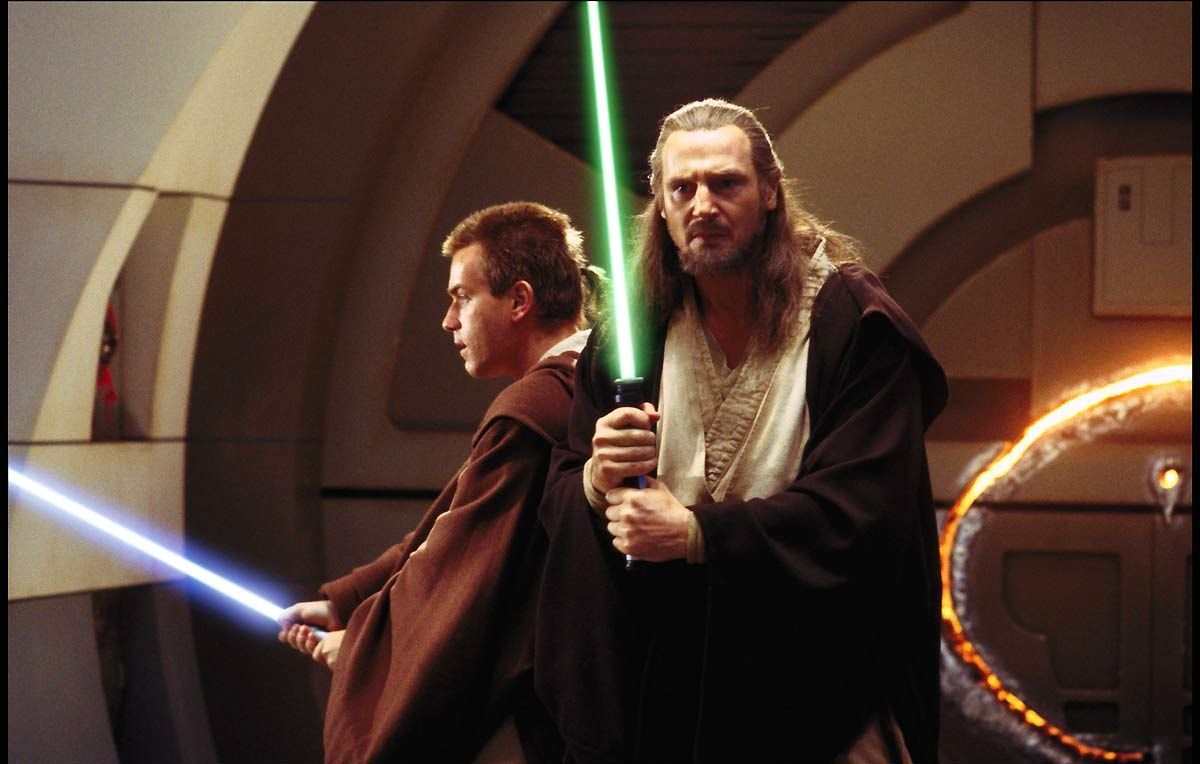
Star Wars, Star Wars: Episode 1 Review: Why The Phantom Menace Still Divides Fans
Star Wars, Star Wars: Episode 1 remains one of the most debated films in the franchise. Some people enjoy its world-building, podracing, Darth Maul, and John Williams’ score. Others see it as a major disappointment that traded character, tension, and adventure for flat dialogue, heavy exposition, and digital excess.
I fall closer to the second camp, but not to an extreme. Star Wars: Episode 1 is not an unwatchable disaster. It is a below-average blockbuster with a few standout elements and a long list of creative choices that hold it back. If you are deciding whether it deserves a rewatch, or trying to understand why reactions to it are still so strong, the answer comes down to one thing: the film gets some important pieces of Star Wars badly wrong.
What is Star Wars: Episode 1 actually trying to do?
Star Wars: Episode 1, also known as The Phantom Menace, serves as a prequel to the original trilogy. Its job is to introduce young Anakin Skywalker, establish the Jedi before their fall, and set up Palpatine’s rise to power.
On paper, that is a strong foundation. A story about the beginning of Anakin’s path, the political decay of the Republic, and the hidden return of the Sith should be compelling.
The problem is execution.
Instead of building the film around a clear emotional core, the story spends a huge amount of time on trade disputes, Senate maneuvering, peace treaties, and procedural conflict. Politics can work in Star Wars, but only when they support the characters and stakes. Here, they often become the focus.
The biggest problem: it lacks a clear main character
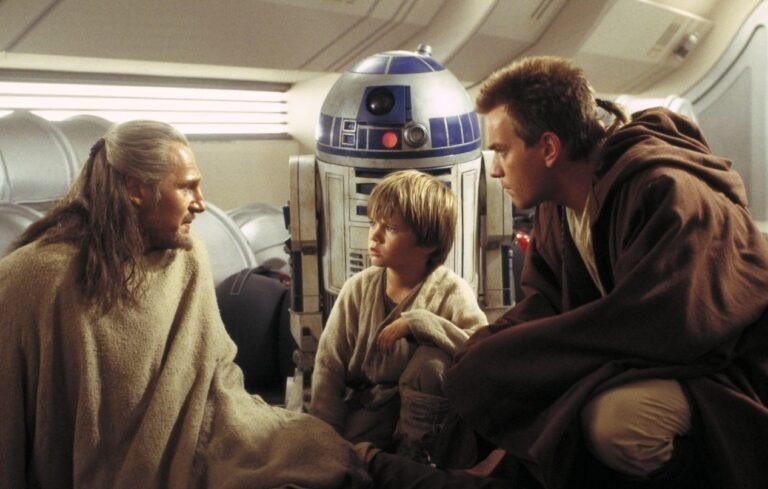
One reason Star Wars: Episode 1 feels strangely distant is that it never fully commits to a central point of view.
Who is the lead?
- Qui-Gon Jinn gets major narrative attention
- Obi-Wan Kenobi is present, but underused
- Anakin Skywalker is crucial to the saga, yet enters late and does not fully carry the film
- Queen Amidala has plot importance, but not enough emotional focus to anchor the movie
This creates a structural problem. Strong Star Wars films usually give the audience someone to emotionally track. In the original trilogy, Luke provides that center. In Star Wars: Episode 1, the focus shifts so often that the movie never builds momentum around one character’s emotional journey.
That weakens everything else, including suspense and payoff.
Why the dialogue and performances feel flat
Another common criticism of Star Wars: Episode 1 is the stiffness of its acting. That is not because the cast lacked talent. The film features performers like Liam Neeson, Ewan McGregor, Natalie Portman, Ian McDiarmid, and others who have done strong work elsewhere.
The issue is that many performances in the film land on the same emotional level. Characters often speak in a restrained, mechanical rhythm, whether the scene is dangerous, emotional, or routine. That sameness drains scenes that should feel urgent or dramatic.
When nearly every character responds to events with similar calmness, the movie loses contrast. Action scenes feel less dangerous. Confrontations feel less heated. Discoveries feel less important.
In a franchise built on mythic emotion, that is a serious flaw.
Jar Jar Binks and why the character became such a lightning rod
It is impossible to discuss Star Wars: Episode 1 without mentioning Jar Jar Binks. The backlash to the character has been discussed for years, and for good reason.
The core problem is not simply that Jar Jar is comic relief. Comic relief can work in Star Wars. The issue is that the humor often feels tonally disconnected from the rest of the film and undercuts scenes rather than enhancing them.
For many people, the character becomes less a source of energy and more a constant distraction. When a story already struggles with tone, pacing, and emotional investment, an irritating comic presence makes those weaknesses harder to ignore.
The politics in Star Wars: Episode 1 are not just boring, they are dramatically weak
Politics are not automatically a problem. The real issue is that Star Wars: Episode 1 builds major plot movement around dry procedural goals that do not feel emotionally compelling.
Much of the story revolves around trade conflict, signatures, negotiations, Senate procedure, and legalistic power shifts. That might sound fine in a summary, but drama needs more than information. It needs tension tied to people.
Compare these two approaches:
- External bureaucracy: people argue over rules and documents
- Internal conflict: characters struggle with fear, loyalty, temptation, or sacrifice
Star Wars is strongest when the external plot reflects internal stakes. Star Wars: Episode 1 too often feels like the opposite. The plot moves, but the audience is left with little emotional reason to care.
Darth Maul proves how powerful simplicity can be
One of the clearest examples of what Star Wars: Episode 1 gets right is Darth Maul.
He has limited dialogue and minimal complexity in this film, yet he makes a strong impression. Why?
- His visual design is memorable
- His presence feels dangerous
- His fighting style stands out
- He brings mystery and menace without overexplanation
That matters because it shows how effective a Star Wars character can be when the concept is clear and the execution is sharp. Darth Maul does not need long speeches to work. He just needs to feel like a threat, and he does.
In a movie full of overtalking, his simplicity is part of the appeal.
The duel at the end is one of the movie’s real strengths
If there is one sequence that consistently stands above the rest, it is the final lightsaber battle involving Qui-Gon Jinn, Obi-Wan Kenobi, and Darth Maul.
Why does it work better than much of the film?
- The choreography is energetic
- The staging is visually striking
- The music adds intensity
- The sequence finally feels urgent
Even if the emotional depth is thinner than the best duels in the saga, the scene has momentum and style. It feels like a major event instead of another information dump.
This is important when evaluating Star Wars: Episode 1 fairly. The film does contain moments of real entertainment. They just are not enough to carry the whole experience.
How CGI hurt the movie over time
When people revisit Star Wars: Episode 1, one of the most noticeable issues is how dated much of the digital imagery looks. The movie relies heavily on CGI, and that reliance affects both realism and atmosphere.
There are two problems here:
1. The visuals can feel artificial
Many environments, characters, and action beats lack the tactile quality that practical effects often provide. Instead of feeling grounded, scenes can seem weightless and synthetic.
2. Too much digital imagery weakens visual focus
Large numbers of computer-generated elements often compete for attention within the frame. Rather than enhancing immersion, they can make scenes feel cluttered.
Older practical effects in Star Wars often age better because physical models and built environments were real objects captured by a camera. Digital work can still be effective, but in Star Wars: Episode 1, the balance often feels off.
Why the action sometimes has less tension than it should
On paper, the movie has plenty of action. Jedi fights, droid battles, a podrace, a space battle, and a final showdown should create constant excitement.
But excitement is not the same as tension.
Several action scenes in Star Wars: Episode 1 feel technically busy without being emotionally gripping. One reason is the enemy design. The battle droids are intentionally lightweight and often come across as disposable rather than threatening. Another reason is performance tone. Characters frequently seem too composed, even when they should be under pressure.
Suspense depends on vulnerability. If the heroes rarely seem rattled and the enemies rarely seem dangerous, the action may look polished without feeling intense.
The podrace is exciting, but not flawless
The podrace is usually listed among the highlights of Star Wars: Episode 1, and I understand why. It has speed, scale, spectacle, and a clear objective. It is one of the film’s most entertaining set pieces.
At the same time, it is not above criticism. Repetition in shot design can make the sequence feel visually less dynamic than it first appears. That does not ruin the scene, but it does keep it from being as thrilling as it could have been.
Still, compared to the film’s talk-heavy political sections, the podrace delivers something the movie badly needs: movement, immediacy, and a simple dramatic situation.
Anakin Skywalker in Star Wars: Episode 1
Introducing young Anakin was always going to be difficult. The character needed to feel important without becoming too self-conscious or overly cute. In Star Wars: Episode 1, that balance does not fully work.
The issue is less about the concept of a child Anakin and more about how the material is written and directed. Some scenes lean too hard into simplistic innocence or awkward dialogue, which makes the character feel less natural than intended.
That matters because Anakin should be the emotional future of the saga. If his introduction feels off, the foundation of the prequel trilogy immediately becomes shakier.
The Jedi are strangely passive
Another major weakness in Star Wars: Episode 1 is how the Jedi come across. They are supposed to be wise guardians facing the return of an old threat. Instead, much of their role consists of discussion, hesitation, and detached judgment.
The Jedi Council scenes especially make the order feel rigid and unhelpful rather than powerful or inspiring. This may have been intended as part of the broader prequel-era decline, but in this film it often just makes them seem inactive.
That creates a strange effect. A movie filled with Jedi should feel energized by their presence. Instead, many of their scenes slow the story down.
Midichlorians and the force problem
Few ideas in Star Wars: Episode 1 caused more frustration than the introduction of midichlorians. The force in Star Wars had long been presented as mystical, spiritual, and larger than ordinary explanation. Giving it a biological measurement changed how it felt.
For many fans, this did not add depth. It reduced wonder.
The complaint is not about science existing in Star Wars. The complaint is that overexplaining the force makes it less mythic. Sometimes mystery is not a gap to fix. It is part of what makes the concept resonate.
What Star Wars: Episode 1 gets right
For all its flaws, Star Wars: Episode 1 is not without strengths. A balanced review should acknowledge them clearly.
- Darth Maul is memorable and visually iconic
- The final duel is exciting and well staged
- The podrace adds energy and spectacle
- John Williams’ score is excellent, especially the music tied to the climax
- The film’s ambition is obvious, even when the results are uneven
These qualities explain why some fans continue to defend it. There is enough imagination and franchise appeal here to make the movie watchable, even if it falls far short of its potential.
Common misconceptions about The Phantom Menace
“It is one of the worst movies ever made”
No. Star Wars: Episode 1 is disappointing, often dull, and creatively misguided in key areas, but it is not in the same category as genuinely incompetent filmmaking. The craft level, production scale, and isolated strengths prevent that.
“If you dislike it, you only dislike change”
That is too simplistic. Many criticisms focus on structure, dialogue, pacing, character emphasis, tension, and visual overreliance on CGI. Those are concrete film issues, not just nostalgia complaints.
“If you enjoy it, your opinion is wrong”
Also false. There are real pleasures in Star Wars: Episode 1, especially for people who connect with its action, music, or expanded world. The film is divisive because it contains both striking strengths and frustrating weaknesses.
Why Star Wars: Episode 1 was such a major disappointment
The harsh reaction to Star Wars: Episode 1 was not just about the movie itself. It was also about expectation.
This was the return of Star Wars to theaters after a long gap. Hype was enormous. Anticipation was intense. For many people, the hope was not just for a good movie, but for an unforgettable one.
When a film arrives with that level of cultural weight, merely being mediocre feels worse than usual. A disappointing blockbuster is one thing. A disappointing Star Wars film is something else entirely.
If you are rewatching The Phantom Menace, what should you focus on?
If you want to revisit Star Wars: Episode 1 with a clear lens, these are the main things worth paying attention to:
- Character focus: ask whether the film gives you a true emotional anchor
- Scene energy: notice how often characters are simply explaining or discussing events
- Visual texture: compare practical-looking moments with heavily digital scenes
- Tension: consider whether the action feels dangerous or merely busy
- Standout elements: track how much Darth Maul, the score, and the finale elevate the film
This approach makes it easier to separate franchise affection from the movie’s actual strengths and weaknesses.
Final verdict on Star Wars, Star Wars: Episode 1
Star Wars, Star Wars: Episode 1 is a fascinating case study in how a movie can be packed with resources, mythology, and hype and still miss the emotional core that made the franchise special in the first place.
It has memorable pieces. Darth Maul works. The score works. Parts of the action work. But the film as a whole suffers from unclear character focus, flat performances, weak dramatic stakes, too much procedural politics, and an overdependence on CGI that has only become more noticeable over time.
If the question is whether Star Wars: Episode 1 is good, my answer is no, not overall. If the question is whether it is worth discussing, revisiting, and arguing about, absolutely. Few franchise movies are this flawed and this culturally durable at the same time.
Bottom line: Star Wars: Episode 1 is not the worst film ever made, but it is a major letdown that never fully figures out what kind of Star Wars story it wants to be.


Laisser un commentaire