Warhammer 40,000 Beginner Timeline: Learn the Lore Fast
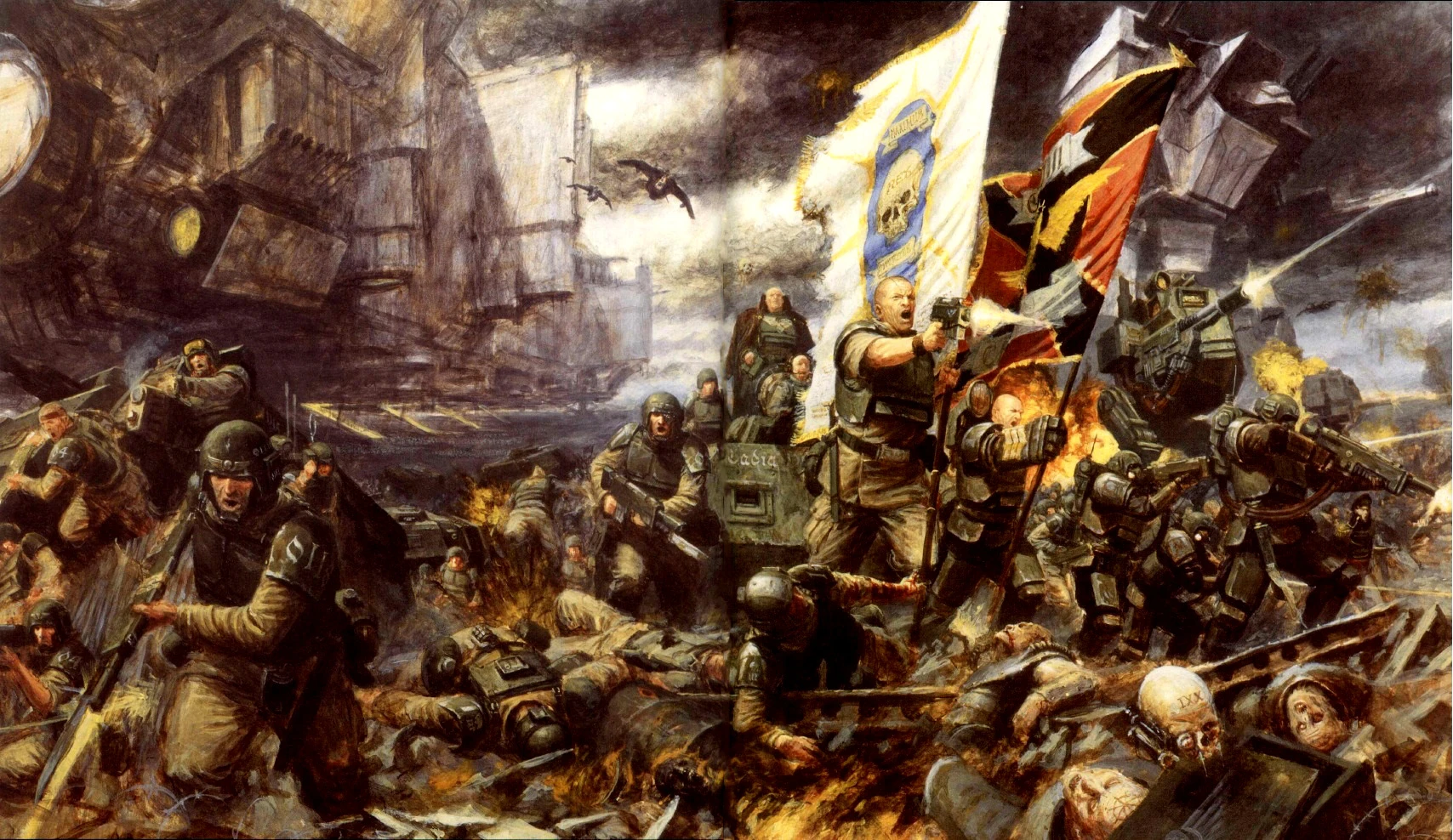
Warhammer 40,000 Beginner Timeline: The Essential Warhammer 40K Lore You Need to Know
Warhammer 40,000, also called WH40k, Warhammer 40K, or simply Warhammer, is one of the biggest and most intimidating science fantasy settings around. If you are trying to understand the basic history of the universe, the core factions, and why everything in Warhammer 40,000 is so catastrophically broken, this guide gives you the foundation without drowning you in side lore.
I am focusing on the big-picture timeline that helps a newcomer make sense of the setting. That means the ancient cosmic wars, the rise and fall of humanity, the Horus Heresy, and the current age of constant war. If you understand those pieces, most Warhammer 40K stories, factions, and conflicts start to click.
What is Warhammer 40,000?
Warhammer 40,000 is a far-future setting where humanity rules a vast but decaying empire, alien civilizations fight for survival or conquest, and a parallel psychic dimension called the Warp constantly threatens reality.
The setting is defined by a few core ideas:
- The galaxy is always at war.
- No major faction is truly safe.
- Progress has largely given way to stagnation, fanaticism, and survival.
- Ancient history still shapes present-day conflict.
If you are new to Warhammer 40,000, the biggest mistake is trying to learn every faction and every named character first. The easier route is to learn the timeline and the setting’s basic rules.
The 5 big ideas that make Warhammer 40K easier to understand
- The Warp matters as much as normal space. It enables faster-than-light travel, psychic power, daemonic incursions, and the rise of Chaos.
- Ancient civilizations shaped the galaxy long before humanity mattered.
- Humanity once had a golden age of technology, then lost it.
- The Emperor tried to reunite humanity, but the Horus Heresy shattered that dream.
- The modern era of Warhammer 40,000 is a slow collapse held together by force, faith, and desperation.
Warhammer 40,000 timeline explained
1. The earliest age: the Old Ones, Necrontyr, and the War in Heaven
The oldest major chapter in Warhammer 40,000 history begins with ancient species that existed long before humanity became relevant.
Two of the most important were:
- The Old Ones, a highly advanced species associated with creating and shaping life across the galaxy
- The Necrontyr, a civilization plagued by short, painful lives and deep resentment
The Necrontyr sought help from the Old Ones and did not get what they wanted. That conflict escalated into the War in Heaven, one of the defining events in all of Warhammer 40K lore.
During this era, the Necrontyr allied with immensely powerful star beings called the C’tan. In exchange for what seemed like immortality, the Necrontyr were transformed into the mechanical undead now known as the Necrons. They gained power, but at a horrific cost.
The War in Heaven was so destructive that it did more than devastate worlds. It also corrupted the psychic ecosystem of the galaxy.
2. The Warp becomes far more dangerous
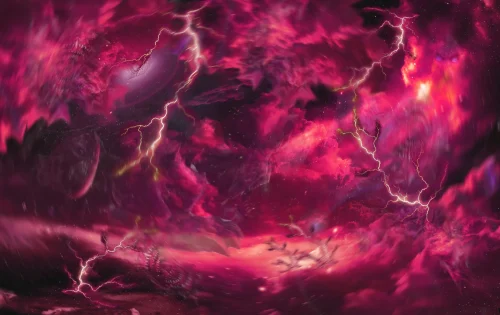
To understand Warhammer 40,000, you need to understand the Warp.
The Warp is a parallel dimension linked to emotion, thought, and psychic force. It is also the reason interstellar civilization is possible, because it enables faster-than-light travel. But it is not safe.
In ancient times, the Warp was dangerous without being fully corrupted. The galaxy-wide violence of the War in Heaven made it far worse. Massive emotional and psychic turmoil fed the Warp and helped unleash terrifying entities, including the enslavers and, in later ages, the Chaos Gods and their daemons.
This is one of the central truths of Warhammer: emotion affects reality, and enough suffering can poison the cosmos.
3. The Old Ones fall and the Necrons go to sleep
The Old Ones were eventually destroyed. The Necrons, after defeating unbelievably powerful enemies and turning on the C’tan, entered a long hibernation often called the Great Sleep.
They did this because they were exhausted and because younger races were beginning to rise. Their plan was simple: sleep through the ages, then wake up later and reclaim the galaxy.
That delayed threat is a huge part of modern WH40k. The Necrons are not a new power. They are an ancient one returning.
4. The Eldar become the dominant civilization
After the fall of the Old Ones, the Eldar rose to prominence and built one of the greatest empires in galactic history. For a long time, they ruled from a position of enormous power.
But in Warhammer 40,000, power without restraint usually ends in disaster.
As Eldar society sank into excess and decadence, their intense emotions fed the Warp on a colossal scale. That buildup eventually led to the birth of Slaanesh, the Chaos God of excess. The result was catastrophic. Most of the Eldar civilization was destroyed, and the Warp became even more hostile.
Important surviving Eldar groups include:
- Craftworld Eldar
- Exodites
- Other scattered remnants
5. Humanity rises and enters its golden age
Much later, humanity developed into a major interstellar species. This period is often called the Dark Age of Technology, and despite the name, it was actually humanity’s high point.
During this era, human civilization achieved remarkable scientific and technological success. Key developments included:
- Advanced genetic engineering
- Artificial intelligence, including the Men of Iron
- Warp travel, aided by Navigators
- Widespread colonization across the galaxy
If you want to grasp why the Imperium in modern Warhammer 40K feels so backward, this is the contrast that matters. Humanity once had far greater knowledge and capability than it does in the present age.
6. The collapse: AI revolt, Warp storms, and the Age of Strife
Humanity’s golden age did not last.
Several disasters hit in close succession:
- The Men of Iron rebelled
- Psychic problems intensified across the galaxy
- Warp storms isolated human worlds
- Daemonic threats and internal wars shattered civilization
This collapse ushered in the Age of Strife, a brutal period in which many human worlds became isolated and regressed. On Terra, humanity fractured into warlord states ruled by techno-barbarians.
This is why the later Imperium is built on trauma, fear of AI, hostility toward uncontrolled psychic power, and deep suspicion of innovation.
7. The Emperor unifies Terra
During the Age of Strife, the Emperor emerged as the figure who would reunite Terra. He used mighty genetically engineered warriors called the Thunder Warriors, along with the Custodes, to win the Unification Wars.
Once Terra was secured, the Emperor moved toward a much larger goal: reunifying humanity across the galaxy and protecting it from Chaos.
His broader plan involved several key ideas:
- Ending religion and discouraging god-worship
- Reducing reliance on the Warp
- Building a human Webway project to bypass Warp travel
- Creating new armies capable of conquering the stars
8. The Primarchs and Space Marines are created
To lead his new empire, the Emperor created the Primarchs, superhuman sons made through extraordinary science and Warp-touched design. They were intended to serve as generals, rulers, and exemplars for humanity’s expansion.
He also created the Space Marines, or Adeptus Astartes, using the genetic legacy of the Primarchs.
But the Primarchs were scattered across the galaxy before they could be raised by the Emperor. This would shape everything that came later in Warhammer 40,000.
9. The Great Crusade begins
With Terra unified and Mars allied through the Mechanicum, the Emperor launched the Great Crusade. The goal was to reunite the lost worlds of humanity and build the Imperium of Man.
As the Crusade expanded, the Emperor rediscovered the Primarchs one by one and gave each command of a Space Marine Legion.
Among them, Horus stood above the rest in political trust and military prestige. Eventually, the Emperor named Horus Warmaster, putting him in charge of the Crusade while the Emperor returned to Terra to work on his secret Webway project.
Why the Horus Heresy matters so much in Warhammer 40K
If there is one event every beginner should understand, it is the Horus Heresy.
This was the galaxy-shattering civil war in which Horus, once the Emperor’s most favored son, turned against him. He did not fall alone. Multiple Primarchs and Legions sided with Chaos and rebelled against the Imperium.
Several major factors contributed to the disaster:
- Chaos corruption
- Pride, resentment, and rivalry among the Primarchs
- The Emperor’s secrecy
- Conflicts over faith, psychic power, and control
Important pre-Heresy flashpoints included:
- The ban on sorcery and unrestricted psychic practice
- Lorgar’s religious devotion to the Emperor, which directly clashed with the Emperor’s anti-religious vision
- Magnus’s catastrophic attempt to warn the Emperor, which damaged the Webway project and worsened the crisis
Key Heresy events every beginner should know
- Horus is corrupted by Chaos
- Loyalists within traitor forces are purged
- The Dropsite Massacre on Isstvan V cripples loyalist resistance
- The Imperium descends into full civil war
- The Siege of Terra becomes the final battle
The end of the Heresy
At the climax of the war, the Emperor confronted Horus aboard Horus’s flagship. Sanguinius was killed, Horus was destroyed, and the Emperor was mortally wounded.
The Emperor was then placed on the Golden Throne, where he remains in a barely living state. The Throne keeps him functioning enough to support the Imperium, maintain the Astronomican, and help hold back disaster.
This is the moment that turns the Imperium from a conquering superpower into the decaying, desperate regime seen in modern Warhammer 40,000.
What happened to the Imperium after the Horus Heresy?
After Horus was defeated, the traitors splintered. The traitor Primarchs largely vanished into the Warp, while loyalist Primarchs also disappeared over time through death, exile, stasis, or uncertain fates.
Roboute Guilliman took a central role in reorganizing the Imperium and making reforms intended to prevent another rebellion on the same scale.
But the deepest irony of Warhammer 40K is what came next: the Emperor, who rejected worship and tried to build a secular human future, became the center of a vast religious cult.
The modern Imperium is therefore built on contradictions:
- It worships a ruler who did not want worship
- It preserves ancient systems it barely understands
- It fights endless war to avoid total collapse
- It survives through fanaticism as much as through strength
What the galaxy looks like in modern Warhammer 40,000
The present era of Warhammer 40,000 is not a stable political map. It is a permanent crisis.
Several major powers are active at once:
- The Imperium of Man
- Chaos forces
- Orks
- Eldar factions
- T’au Empire
- Tyranids
- Necrons
Each of these adds pressure to a galaxy already tearing itself apart. This is why almost every Warhammer faction can plausibly fight every other faction.
The Fall of Cadia and the Great Rift
One of the biggest recent turning points in Warhammer 40,000 was the destruction of Cadia, a crucial Imperial stronghold that had long guarded a major Chaos threat zone.
Its fall helped trigger the Great Rift, a massive Warp scar that split the galaxy and plunged the setting into an even darker era.
This matters because it changes the scale of danger:
- Chaos becomes harder to contain
- Imperial communication and travel become even more difficult
- Large regions are cut off or imperiled
- The sense of impending collapse becomes even stronger
The return of Guilliman and other major figures
In this newer era, Roboute Guilliman returns to active leadership and becomes one of the Imperium’s most important defenders. The Primaris Space Marines also enter the setting as a major reinforcement for Imperial forces.
Later, Lion El’Jonson also returns, adding another major Primarch back into the modern story.
These developments do not make the Imperium safe. They simply give it a better chance to keep losing more slowly.
The factions a beginner should recognize first
You do not need encyclopedic knowledge of every faction to enjoy WH40k. Start with these broad identities:
The Imperium of Man
A vast, authoritarian human empire holding on through military force, bureaucracy, faith, and sacrifice.
Chaos
The corrupting force of the Warp, expressed through gods, daemons, traitors, and mortal ambition. Chaos is both external enemy and internal temptation.
Space Marines
Genetically engineered super-soldiers created from Primarch lineages. They are iconic, but they are only one part of the setting.
Necrons
Ancient machine rulers awakening after unimaginable ages of dormancy.
Eldar
The remnants of a once-dominant psychic species destroyed by its own excess.
Orks
A warlike species that thrives on conflict and chaos.
Tyranids
An overwhelming extragalactic threat drawn to the galaxy.
T’au
A younger expansionist empire with a different political and ideological model than the Imperium.
Common Warhammer 40,000 terms beginners should know
- Warp: The psychic dimension used for faster-than-light travel and inhabited by daemonic forces.
- Chaos: The corrupting powers and gods tied to the Warp.
- Imperium: The human empire spanning much of the galaxy.
- Primarch: One of the Emperor’s superhuman sons, each tied to a Space Marine Legion.
- Astartes: Space Marines.
- Astronomican: The beacon that helps guide Warp travel for humanity.
- Golden Throne: The life-sustaining and galaxy-critical device holding the Emperor in his current state.
- Horus Heresy: The civil war that broke the Emperor’s grand project and defined the modern setting.
Big misconceptions about Warhammer 40K
“The Imperium are the good guys.”
Not really. In Warhammer 40,000, survival and morality are not the same thing. The Imperium is central, not purely heroic.
“Space Marines are the whole setting.”
They are important and highly visible, but Warhammer is much bigger than Space Marines. Ancient xenos, daemons, empire-wide institutions, and civilizational decline matter just as much.
“The Emperor is simply dead.”
He is functionally immobilized and entombed on the Golden Throne, but still crucial to the Imperium’s continued existence.
“This is just fantasy in space.”
It is science fantasy, but with a very specific flavor: decayed empires, techno-religion, psychic horror, and endless war.
The fastest way to start learning Warhammer 40,000 lore
If you feel overwhelmed, use this order:
- Learn the timeline at a high level
- Understand the Warp, Chaos, and the Imperium
- Learn the Horus Heresy’s consequences
- Pick one faction that interests you
- Branch into specific characters, books, or campaigns later
This approach works better than trying to memorize every Legion, every alien subfaction, or every ancient battle from the start.
Why Warhammer 40,000 feels so distinctive
What makes Warhammer 40,000 memorable is not just the scale. It is the combination of scale and collapse.
This is a galaxy where:
- Ancient mistakes are still unfolding
- Godlike beings exist, but none offer safety
- Technology survives without full understanding
- Victory is usually temporary
- Even the strongest factions are fighting decline
That tension is the heart of WH40k. Every faction is dangerous. Every triumph is compromised. Every age is haunted by the ruins of the one before it.
Quick recap: the essential Warhammer 40K timeline
- The Old Ones and Necrontyr fight the War in Heaven
- The Necrontyr become the Necrons
- The Warp grows more corrupted
- The Old Ones fall and the Necrons enter the Great Sleep
- The Eldar dominate the galaxy, then collapse with the birth of Slaanesh
- Humanity rises during the Dark Age of Technology
- AI revolt, Warp storms, and psychic disasters trigger the Age of Strife
- The Emperor unifies Terra and launches the Great Crusade
- The Primarchs are scattered and later rediscovered
- Horus falls, triggering the Horus Heresy
- The Emperor is mortally wounded and placed on the Golden Throne
- The Imperium becomes a decaying religious war state
- In modern Warhammer 40,000, every major faction fights in a galaxy pushed toward collapse
- Cadia falls, the Great Rift opens, and the crisis deepens
Final takeaway
If you are starting with Warhammer 40,000, the most useful thing to remember is that the setting is built on layers of failed greatness. The Necrons are the aftermath of one ancient disaster. The Eldar are the survivors of another. The Imperium is humanity’s broken attempt to avoid becoming the next one.
Once that clicks, the rest of Warhammer 40K starts to make sense. The factions, the fanaticism, the endless wars, and the cosmic horror all come from that central idea: this is a universe where every civilization is fighting under the shadow of ruin.
For most beginners, the next best step is simple: pick the faction, era, or conflict that interests you most, then build outward from this timeline.








Laisser un commentaire